
In the last Number Cruncher, we looked at U.S. companies where management is buying back shares despite market pessimism. In this article, we take a closer look at three companies from that screen: EPAM Systems Inc., The Trade Desk Inc. and Universal Health Services Inc.
EPAM Systems Inc. (EPAM-N)
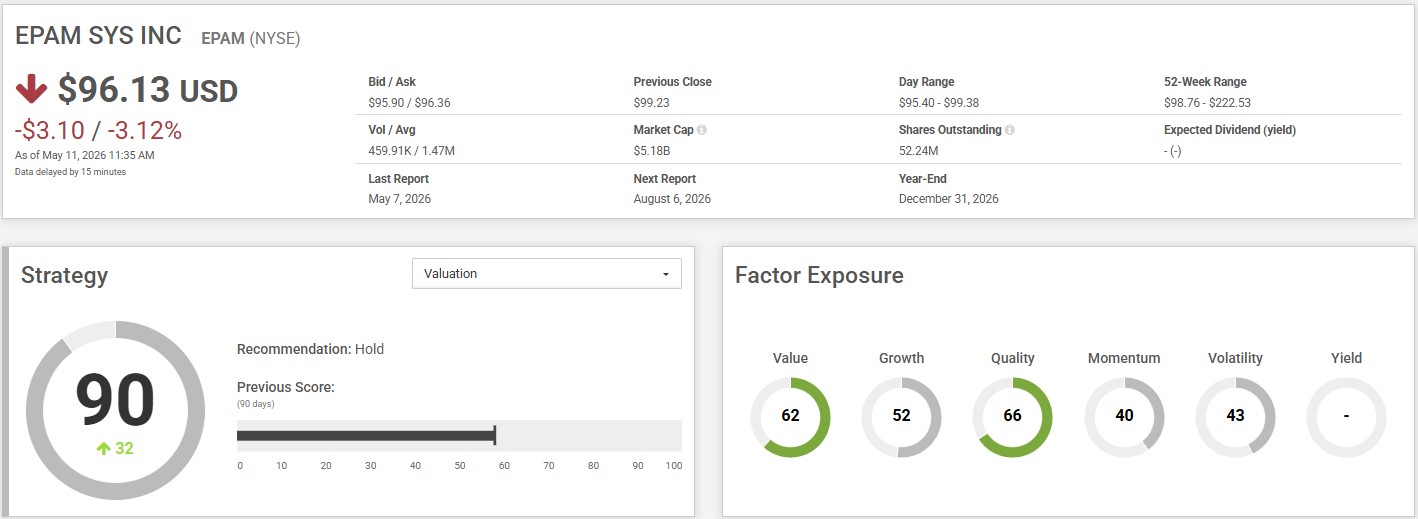
EPAM Systems has a Value score of 62 and a Quality score of 66, indicating that the company ranks well on valuation and profitability measures compared with its sector and the overall market. CPMS helps determine the most suitable strategy for a stock, and EPAM’s strong valuation characteristics make it a good fit for the Valuation strategy.
The CPMS US Valuation Strategy is suited for investors seeking value for money through stocks with low prices to reported earnings and cash flow ratios. The strategy emphasizes stocks with low P/E multiples based on reported earnings as well as at low P/CF multiples based on reported cash flow. Importance is also placed on stocks with high earnings estimate revisions.
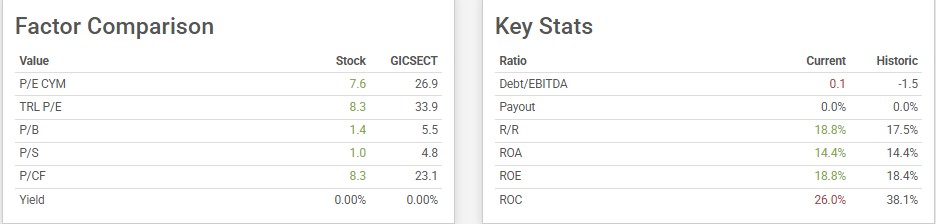
EPAM also appears attractive on valuation. Its current-year median P/E is 7.6 times compared with 26.9 times for the sector, while its trailing P/E is 8.3 times compared with 33.9 times for the sector. This discount helps explain why the stock screens are well under CPMS’s Valuation strategy.
EPAM in key stats section shows strong three-year reinvestment rate of 18.8 per cent, return on assets 14.4 per cent and return on equity of 18.8 per cent, suggesting strong operating efficiency and effective use of capital.
The Trade Desk Inc. (TTD-Q)
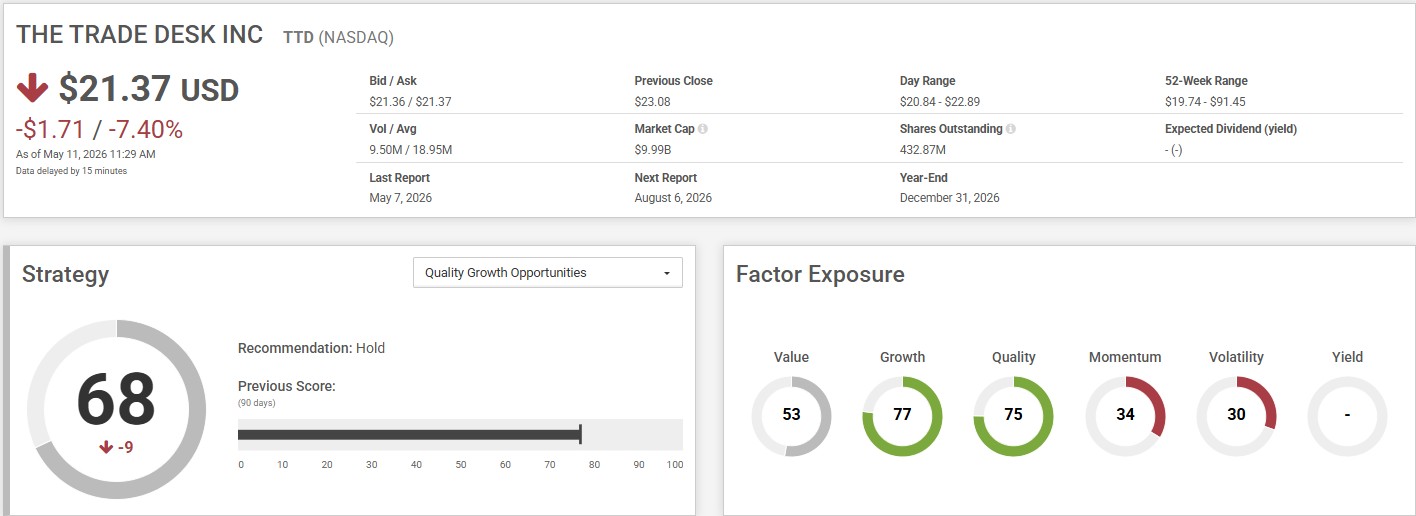
The Trade Desk has a Growth score of 77 and a Quality score of 75, indicating its strong growth and operating quality ranking compared with its sector and the overall market. The Trade Desk’s strength in Growth and Quality makes it a good fit for the Quality Growth Opportunities strategy.
The Quality Growth Opportunities strategy is designed for investors looking for stocks with credible growth potential supported by steady earnings momentum. The strategy identifies stocks with high reinvestment rate and earnings momentum in recent years. Focus is also placed on market recognition and expectation of growth in the coming year and also an acceptable level of liquidity.
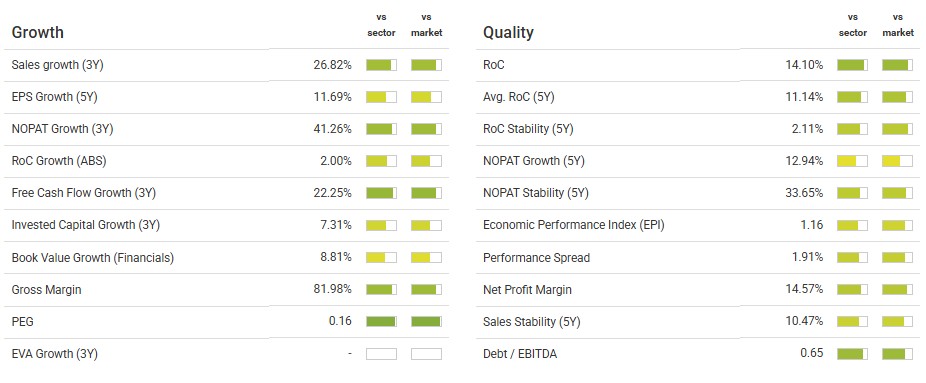
Looking at the growth metrics, The Trade Desk has delivered three-year sales growth of 26.82 per cent and three-year NOPAT growth of 41.26 per cent. Free cash flow growth has also been strong at 22.25 per cent over the same period. These figures suggest that the company continues to grow its operations and cash generation, even though investor sentiment toward the stock has weakened.
The quality metrics also support the company’s profile. The Trade Desk reports a return on capital of 14.10 per cent and a net profit margin of 14.57 per cent, while debt-to-EBITDA remains modest at 0.65. Combined with a gross margin of 81.98 per cent, these numbers point to a business with strong profitability and a relatively conservative balance sheet. For investors willing to look past near-term share-price weakness, The Trade Desk may offer exposure to a profitable growth business trading under a cloud of market pessimism.
Universal Health Services Inc. (UHS-N)
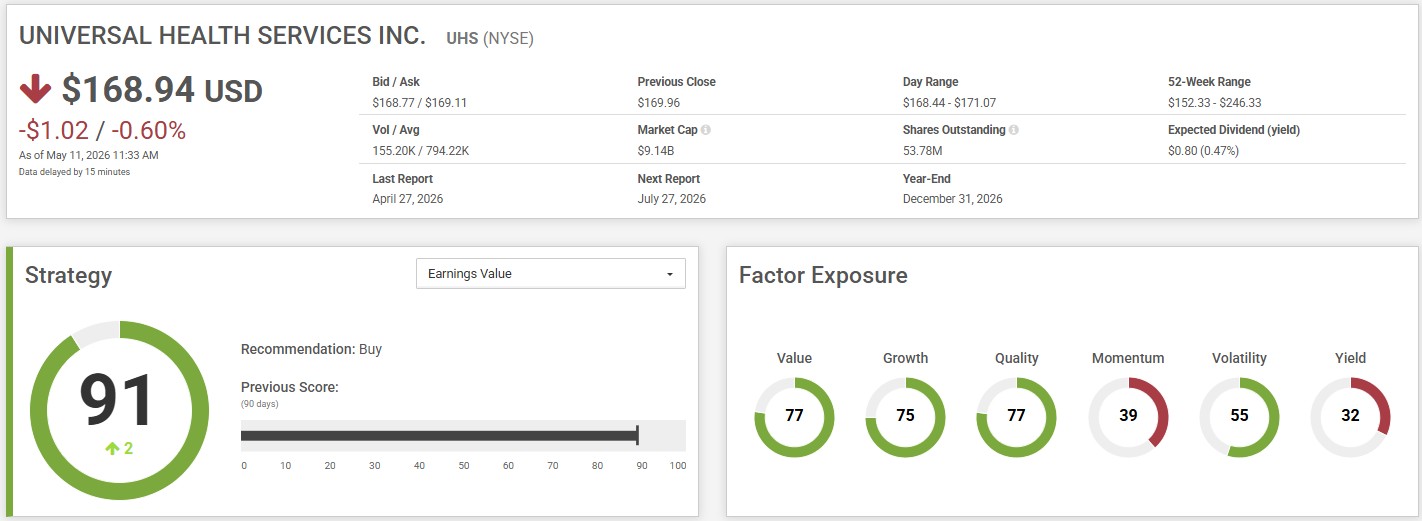
Universal Health Services has a Value score of 77, a Growth score of 75 and a Quality score of 77, indicating a balanced profile across the main CPMS factor categories.
The company scores 91 in CPMS’s Earnings Value strategy. The Earnings Value strategy is designed for investors focused on valuation. The emphasis is on stocks trading at low price to reported earnings multiples. The strategy looks for an improvement in the multiple or for growth in the price of the stock as a result of continued positive reported earnings growth without any disappointments in the reported numbers or negative revisions to future expectations.
Universal Health Services’ supporting metrics also highlight a company with a balanced shareholder return and value profile. The company provides a modest dividend, yield of 0.47 per cent. Its payout ratio is low at 3.5 per cent, suggesting that the dividend is well covered and leaves room for other capital-allocation priorities, including share repurchases.
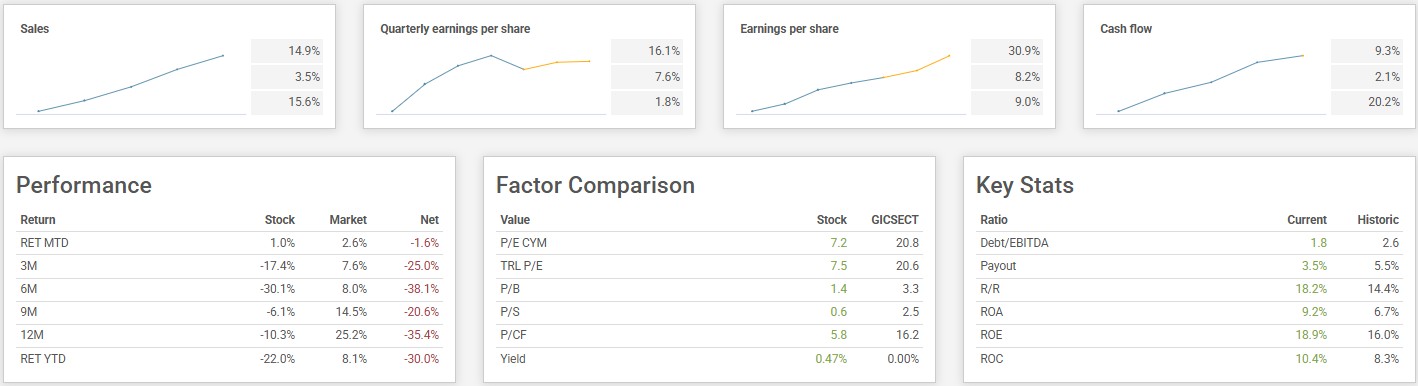
The valuation comparison is also supportive. UHS trades at a current-year P/E of 7.2 times, compared with 20.8 times for its sector. Its price-to-sales ratio of 0.6 times and price-to-cash-flow ratio of 5.8 times are also well below sector levels, reinforcing the stock’s value profile.
The company’s factor exposure profile suggests that UHS is not simply a value stock. It also ranks well on growth and quality, which makes it one of the more balanced names in the group. This combination may appeal to investors looking for companies with attractive valuation characteristics but without sacrificing profitability or business quality.
Conclusion
By leveraging the CPMS engine, investors can screen and identify stocks that align with specific investment criteria. In this analysis, we focused on U.S. companies where management is buying back shares despite weak market sentiment. EPAM Systems, The Trade Desk and Universal Health Services all demonstrated characteristics that fit this theme.
EPAM stands out for its valuation score and strong growth metrics despite weak momentum. The Trade Desk offers strong growth and quality scores, but investors must be willing to accept higher volatility and weaker price momentum. Universal Health Services appears to be the most balanced of the three.
In conclusion, the CPMS engine provides a valuable tool for identifying high-potential stocks that align with specific investment strategies. However, it is essential to consider individual risk tolerance and investment objectives before making any commitments. A well-balanced approach that incorporates both fundamental analysis and strategic insights from CPMS can help investors navigate market uncertainties and optimize portfolio performance.