
In uncertain market environments, investors often look for companies that can provide stability, resilience and consistent profitability. Healthcare has long been considered one of the more defensive sectors.
To identify these opportunities, in our last number cruncher, we screened the U.S. healthcare universe, as classified under the Global Industry Classification Standard, for companies with market capitalizations above US$25 billion. We then ranked companies in the top 25th percentile based on a five-year average return on invested capital above 15 per cent, positive three-month earnings revisions, and 10-year EBITDA standard deviation below 15 per cent. These criteria helped us focus on businesses with strong capital efficiency, improving earnings expectations and stable operating performance.
Based on these parameters, three stocks stood out for their combination of profitability, earnings stability and improving analyst sentiment: Cardinal Health Inc. (CAH-N), Zoetis Inc. (ZTS-N) and Intuitive Surgical Inc. (ISRG-Q). We will look at each of these companies in more detail to better understand the characteristics that made them stand out in our screen.
Cardinal Health Inc (CAH: NYSE)
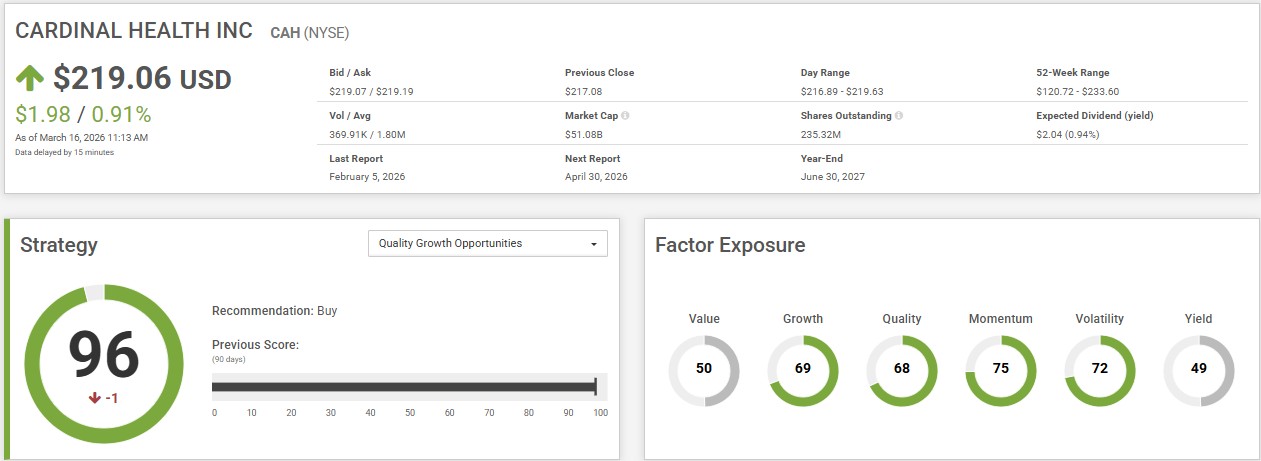
Starting with Cardinal Health, we can see that the company scores very strongly under CPMS’s Quality Growth Opportunities strategy, with an overall strategy score of 96. The Quality Growth Opportunities strategy is designed for investors looking for stocks with credible growth potential supported by steady earnings momentum. The strategy identifies stocks with high reinvestment rate and earnings momentum in recent years.
Looking across CPMS’s factor exposure categories, Cardinal Health shows particular strength in Momentum (75) and Volatility (72). This suggests that the company combines stable trading characteristics with positive market recognition and healthy underlying fundamentals.
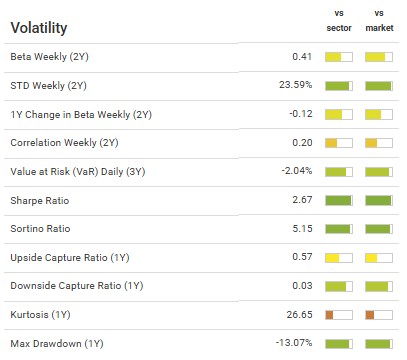
Looking more closely at Cardinal Health’s volatility metrics, the stock appears to demonstrate relatively stable risk characteristics compared with both its sector and the broader market. The company has a weekly beta of 0.41 over two years, indicating lower sensitivity to market movements, while its daily value at risk (3Y) is -2.04 per cent. Cardinal Health also reports a Sharpe ratio of 2.67 and a Sortino ratio of 5.15, both of which point to strong risk-adjusted returns. Although the stock’s one-year max drawdown of -13.07 per cent is still worth noting, the broader volatility profile suggests that Cardinal Health has offered investors relatively stable performance.
Zoetis Inc (ZTS:NYSE)
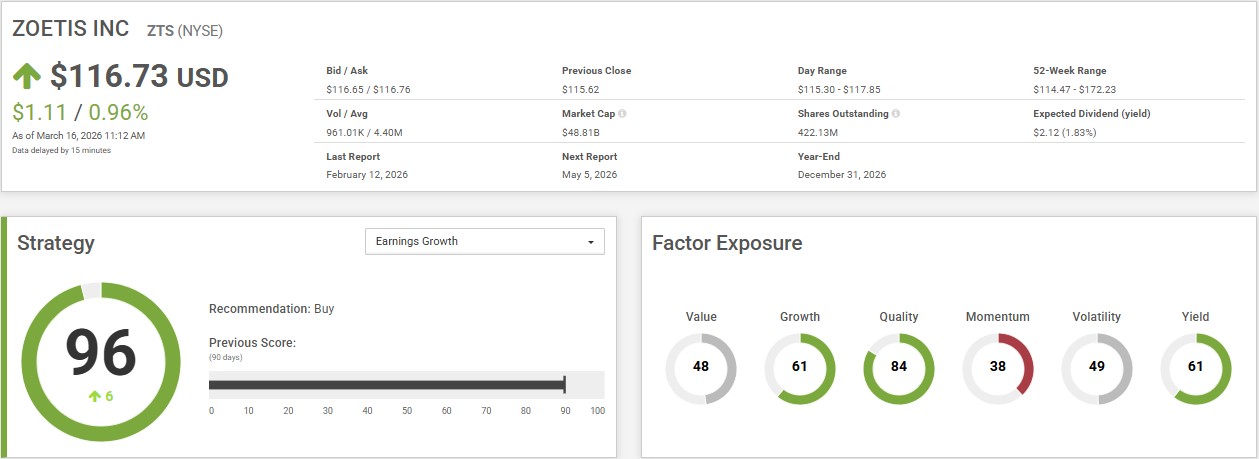
Turning to Zoetis, the company stands out with a strategy score of 96 under the Earnings Growth strategy. The CPMS US Earnings Growth Strategy is suited for investors seeking high growth rates. The strategy emphasizes stocks with high current profitability to equity ratios. Importance is also placed on stocks with high earnings estimate revisions and earnings surprise.
Among its factor exposures, Zoetis shows particular strength in Quality (84), which is the highest score across its factor profile, while also posting solid readings in Growth (61) and Yield (61). This suggests that the company combines strong underlying business quality with a healthy growth profile and shareholder return potential.
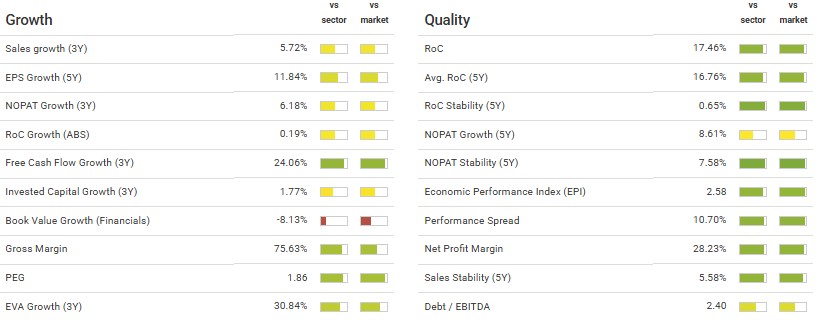
The company reports a return on capital of 17.46 per cent and a five-year average return on capital of 16.76 per cent, highlighting its ability to generate attractive returns from invested capital. Its return on capital stability over five years is 0.65 per cent, while NOPAT stability over five years is 7.58 per cent, reinforcing the view that the business has delivered relatively consistent operating performance.
Intuitive Surgical Inc (ISRG-NASDAQ)
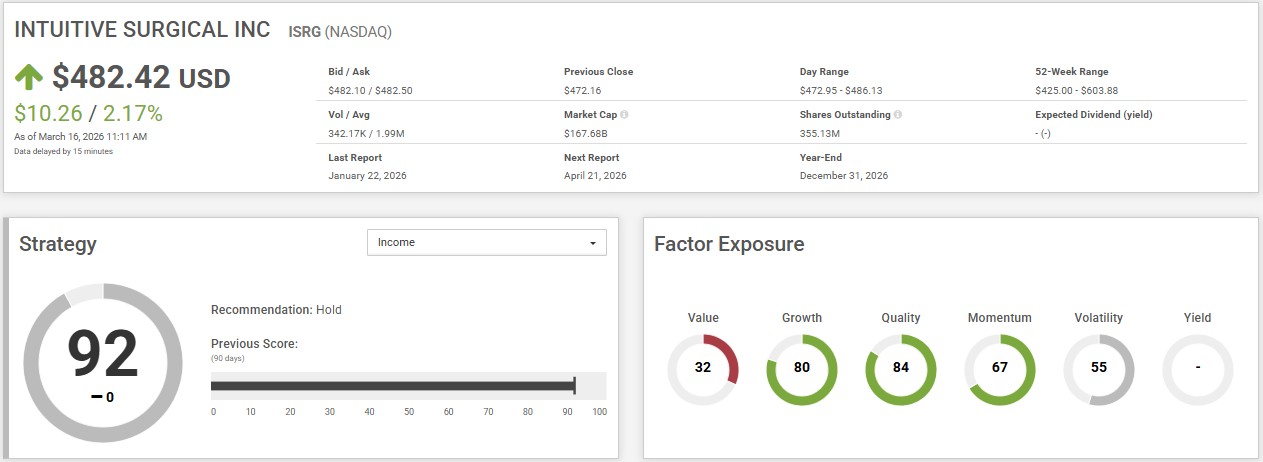
Lastly, Intuitive Surgical stands out with a strategy score of 92 under the Income strategy. The Income strategy is designed for income-oriented investors. This strategy selects large cap stocks with high dividend yields compared to their peers and with high return on assets and equity whose expectations of future earnings are increasing.
Looking at its factor exposures, the company shows notable strength in Quality (84) and Growth (80). The broader factor profile suggests that Intuitive Surgical remains a high-quality growth company with strong operating characteristics and continued market support.
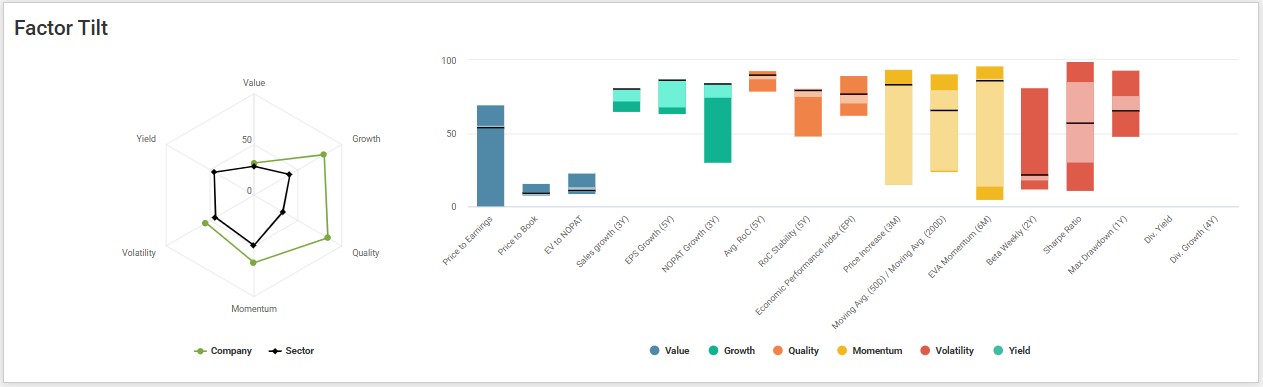
Relative to its sector, Intuitive Surgical shows stronger exposure in growth, quality, momentum and volatility, while lagging on value. The underlying factor detail points to solid growth and quality metrics, including strong readings in sales growth, EPS growth, NOPAT growth and average return on capital, alongside supportive quality indicators such as return on capital stability and economic performance index.
Taken together, these characteristics help explain why Intuitive Surgical stood out in our screen for defensive healthcare companies with stable returns and positive earnings revisions. The company’s strong growth and quality profile, combined with positive momentum, make it a compelling name for investors seeking exposure to innovative healthcare businesses. At the same time, its lower value score suggests that valuation remains an important consideration when assessing the stock.
Conclusion
Our analysis of Cardinal Health Inc. (CAH-N), Zoetis Inc. (ZTS-N) and Intuitive Surgical Inc. (ISRG-Q) highlights how a disciplined screening framework can help identify healthcare companies with strong profitability, stable operating performance and improving earnings expectations.
Cardinal Health stands out for its strong momentum and favourable risk-adjusted performance metrics, supporting its appeal as a defensive large-cap healthcare name. Zoetis distinguishes itself through a combination of high-quality fundamentals, earnings stability and free cash flow growth, while Intuitive Surgical offers a compelling mix of quality, growth and momentum supported by its strong position in robotic-assisted surgical technologies.
By focusing on metrics such as return on invested capital, earnings revisions and EBITDA stability, investors can uncover healthcare companies that may offer resilience during periods of market uncertainty. While each of these companies presents different strengths, all three demonstrate characteristics that may appeal to investors seeking defensive positioning within the healthcare sector.
In conclusion, the CPMS engine provides a valuable tool for identifying high-potential stocks that align with specific investment strategies. However, it is essential to consider individual risk tolerance and investment objectives before making any commitments. A well-balanced approach that incorporates both fundamental analysis and strategic insights from CPMS can help investors navigate market uncertainties and optimize portfolio performance.